Information Centre
How to Choose the Right Custom Light Box for Your Space
Standard light boxes can work well for many commercial applications, but custom manufacturing becomes useful when a project requires specific dimensions, finishes, illumination or installation acrylic conditions.
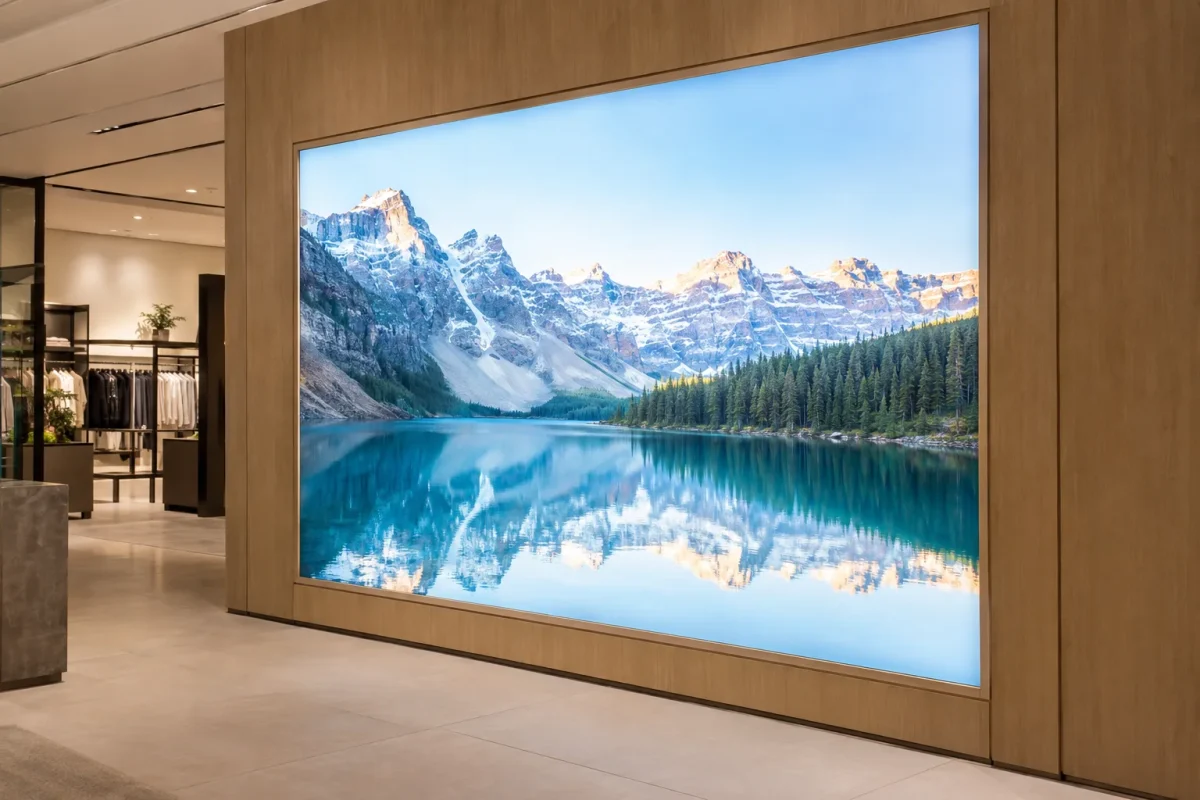
This guide is written for Australian buyers who already understand what a light box is and are now evaluating whether a custom-manufactured solution is the right path forward. By the time you reach the end, you will have everything you need to brief a supplier with confidence.
Key takeaways
- A custom light box is an illuminated display panel manufactured to specific dimensions, materials, and illumination requirements rather than standard off-the-shelf sizes.
- The environment in which a light box will be installed is the single most important variable in determining the correct specification.
- Edge-lit LED panels work well where depth is limited, while backlit configurations suit larger formats or applications requiring higher brightness.
- Custom light boxes can be manufactured in a wide range of custom dimensions, subject to frame, structural and illumination requirements.
- The installation method must be defined before a custom light box is ordered, as it directly affects the frame design, weight rating, fixing requirements, and cable management approach.
- Providing a complete specification brief from the outset can help reduce delays and unnecessary clarification during production.
What Is a Custom Light Box?
A custom light box is an illuminated display panel manufactured to specific dimensions, materials, and illumination requirements rather than standard off-the-shelf sizes. Custom light boxes are used in commercial environments where exact sizing, particular frame finishes, or specific installation conditions cannot be met by standard products.
The distinction matters in practice. Off-the-shelf light boxes come in fixed sizes and limited finish options. A custom-manufactured unit is built to your exact width, height, and depth requirements, in your chosen frame finish, with the illumination type that suits your application. Custom does not automatically mean expensive or slow to produce. A fit-for-purpose custom design can reduce the need for compromises or additional modifications during installation.
Indoor vs Outdoor Light Boxes: Key Differences
The environment in which a light box will be installed is the single most important variable in determining the correct specification. Indoor and outdoor applications have fundamentally different requirements across illumination brightness, weather resistance, materials, and power supply.
| Factor | Indoor Light Box | Outdoor Light Box |
|---|---|---|
| Illumination brightness | Standard LED output | Higher-output LEDs for daylight visibility |
| Weather resistance | Not required | Outdoor light boxes should use an enclosure and electrical components with an IP rating appropriate to the installation environment and exposure conditions. |
| Frame material | Aluminium, acrylic | Powder-coated aluminium, stainless steel |
| UV protection | Standard | UV-stable graphics and sealed housing required |
| Power supply | Standard indoor cabling | Weatherproof cabling and enclosures |
| Graphic format | Backlit film or fabric | UV-printed or backlit film in sealed housing |
For outdoor installations in Australia, the enclosure must be rated to at least IP65 under the IEC 60529 standard, which specifies protection against dust ingress and water jets from any direction. This is particularly relevant in Australian conditions where light boxes may be exposed to intense UV radiation, coastal salt air, or seasonal heavy rain. Outdoor installations generally require UV-resistant graphic materials and suitable weather protection to maintain performance and appearance over time.
Indoor light boxes benefit from more flexibility in illumination and frame choice. Edge-lit LED panels work well where depth is limited, while backlit configurations suit larger formats or applications requiring higher brightness. Both are suitable for indoor use; the decision comes down to aesthetic and installation requirements.
Types of Custom Light Boxes: Which One Is Right for Your Application?
The right custom light box depends on where it will be installed, how the graphic will be displayed, whether the unit needs to be viewed from one or both sides, and how often the artwork will need to be changed.
Slimline Edge-Lit Light Boxes
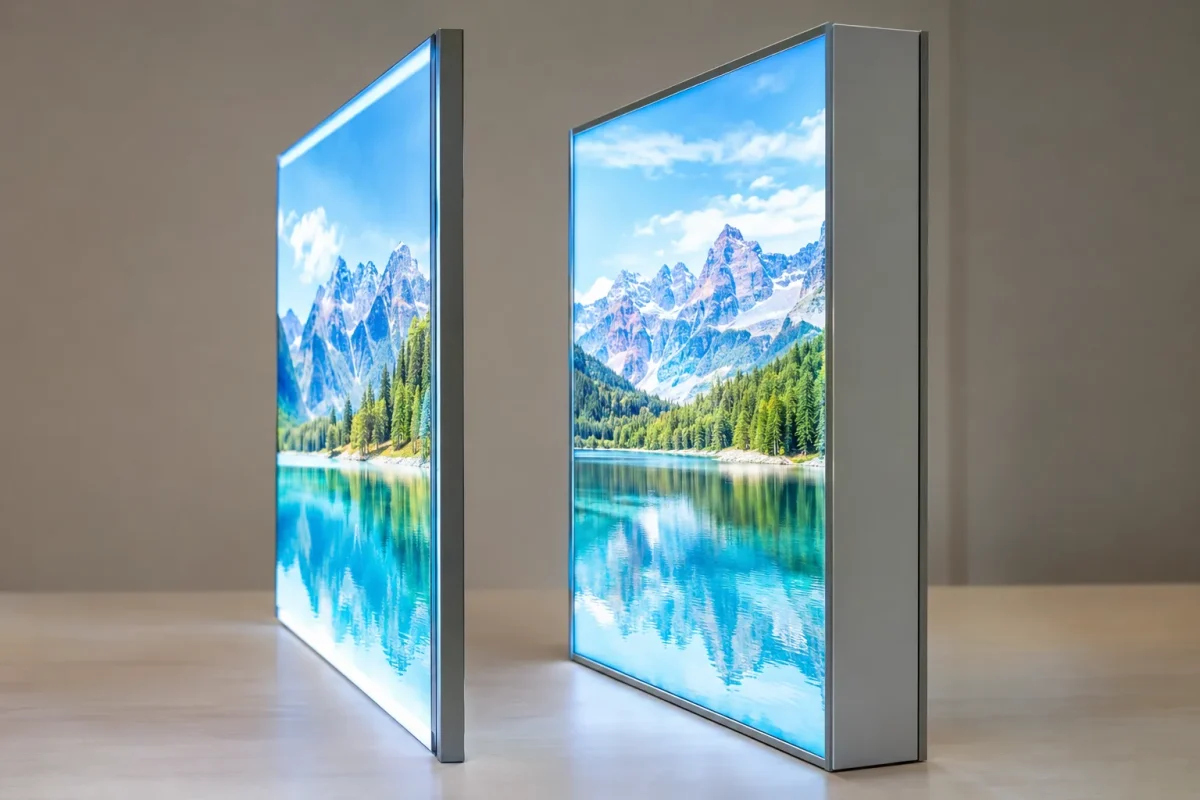
Slimline edge-lit light boxes are designed for applications where a low-profile frame is important. LEDs are positioned around the perimeter of the display, allowing the overall unit to remain relatively slim while still providing illuminated presentation. Custom sizes and colours are also available on selected products.
These are particularly useful when:
- Wall projection needs to be kept to a minimum
- The light box will be recessed into a wall or joinery
- A clean, contemporary appearance is required
- Posters or graphics need to be changed regularly
Backlit Light Boxes
Backlit light boxes position the illumination behind the graphic rather than around the edges. This format is commonly used where stronger, more direct illumination is required or where the display is larger. These can be used for both internal and external signage depending on the specific product specification.
Backlit light boxes can be a strong choice for:
- Retail and shopping centre signage
- Reception and corporate branding
- Large promotional displays
- Permanent illuminated business signage
- Areas where the sign needs strong visibility day and night
Single-Sided Wall-Mounted Light Boxes
Single-sided light boxes are designed to be viewed from the front and are commonly installed directly onto walls, recessed into joinery or integrated into commercial fit-outs.
This format suits environments where the display only needs to face one direction, such as retail walls, reception areas, galleries, restaurants and branded interiors.
A wall-mounted unit allows the dimensions, frame colour, depth and graphic format to be designed around the available installation space rather than forcing the fit-out to accommodate a standard frame.
Double-Sided Light Boxes
Double-sided light boxes display graphics on both faces and are designed for locations where people approach the sign from multiple directions.
Double-sided configurations are particularly suited to:
- Under-awning business signage
- Shopping centres
- Walkways
- Retail precincts
- Hospitality venues
- Suspended or projecting signs
Lockable and Tamper-Resistant Light Boxes
Some commercial environments require additional security, particularly where displays are installed outdoors or in publicly accessible areas. These can suit transport areas, schools, government buildings, hospitality venues and public facilities where the graphic needs protection from tampering or weather exposure.
Custom Art and Image Light Boxes
Custom light boxes can also be manufactured specifically for photographic images, artwork and high-quality visual installations.
These are well suited to:
- Galleries
- Corporate offices
- Hospitality interiors
- Events
- Branded artwork installations
- Photography displays
Can Light Boxes Be Made to Custom Sizes?
Yes. Custom light boxes can be manufactured in a wide range of custom dimensions, subject to frame, structural and illumination requirements. Custom sizing is standard practice for commercial fit-outs and retail rollouts across Australia, not a specialist exception.
When requesting a custom size, you will need to supply the following information:
- Overall width and height (in millimetres, taken from the site installation point)
- Required frame depth or thickness (particularly important for recessed installations)
- Display orientation (landscape or portrait)
- Installation method (wall-mounted, suspended, freestanding, or window-mounted)
For very large formats, a custom light box may require internal structural supports or be produced as segmented panels that align seamlessly at the installation point. Very small formats may have minimum size constraints driven by LED strip placement requirements and the physical dimensions of the frame extrusion. A specialist manufacturer can advise on these boundaries during the quoting process.
Custom sizing is commonly used for commercial fit-outs, retail environments and multi-site projects where standard dimensions do not suit the installation. Batch-ordering custom units to site-specific sizes, rather than forcing standard sizes to fit, can improve visual consistency and reduce the need for site-specific workarounds during installation.
Frame Materials and Finish Options
Aluminium extrusion is commonly used for commercial custom light boxes because it combines structural rigidity, relatively low weight and compatibility with a range of finishes.
Common frame material options include:
- Powder-coated aluminium: Durable, lightweight, and available in a wide range of colours including RAL colour-matched finishes for brand alignment. Suitable for both indoor and outdoor installations.
- Anodised aluminium: A harder surface finish than powder coat, with a metallic appearance. Well-suited to corporate and architectural environments.
- Stainless steel: Used where corrosion resistance and a premium finish are required, particularly in coastal or outdoor environments.
- Steel: A cost-effective structural option for larger freestanding formats.
For most commercial applications, powder-coated aluminium in a standard finish (matte black, anodised silver, or white) can provide a practical balance of performance, aesthetics and cost for many commercial applications where brand consistency across sites requires a specific corporate colour, RAL colour-matching is available from experienced custom manufacturers.
Snap-open frame profiles, which allow the hinged frame face to open for graphic changes without removing the unit from the wall, are available across most aluminium frame systems and are highly recommended for any installation where graphics will be updated periodically.
Graphic Options for Custom Light Boxes
The graphic substrate used in a custom light box directly affects the quality and uniformity of the illuminated display. Graphic and illumination decisions should be made together, not independently.
The main graphic formats used in illuminated custom light boxes are:
- Backlit PVC film: A commonly used substrate for edge-lit and backlit applications. Printed by the buyer’s print partner and supplied cut to size. Translucency of the film is critical; incorrect opacity will cause uneven hotspots or a washed-out appearance.
- UV-printed rigid panels: Used in applications requiring a more permanent graphic or where fabric or film are not appropriate.
- Translucent vinyl: Applied directly to acrylic diffuser panels in some configurations.
Frame artwork templates are typically provided by the manufacturer so that graphics are produced to the correct bleed dimensions and graphic safe zones. If you are supplying graphics through a separate print provider, confirm the frame template and graphic specification requirements with your light box manufacturer before artwork is prepared.
Installation Considerations for Custom Light Boxes
The installation method must be defined before a custom light box is ordered, as it directly affects the frame design, weight rating, fixing requirements, and cable management approach.
Key installation questions to resolve before briefing your supplier:
- Wall-mounted: The most common installation type. Fixing points and load ratings need to align with the substrate (plasterboard, masonry, or timber stud framing).
- Recessed or flush-mounted: Requires the frame to be designed to sit within a prepared wall recess. Frame depth must match the recess depth precisely. Cable routing into the recess must be planned before installation.
- Suspended: Used for ceiling-hung formats in retail or airport environments. Requires suspension point engineering and cable management for power delivery.
- Freestanding: Floor-standing units require a base system sized to the unit weight and format.
- Window-mounted: Typically requires minimal-depth frames and specific fixing configurations to suit glass or mullion attachment.
Where a fixed light box requires connection to mains electricity, installation should be completed in accordance with applicable Australian electrical requirements by an appropriately qualified tradesperson. Cable management, including conduit routing and connection point location, should be planned as part of the installation specification before the unit is manufactured.
Lead Times and the Custom Manufacturing Process
Lead times vary depending on dimensions, finish, materials, quantity and production workload. Confirm the expected timeline with Snapper when requesting a quote. Multi-site rollouts with multiple units of consistent specification may be planned over longer production windows to allow batch manufacturing and coordinated delivery.
The standard stages in the custom manufacturing process are:
- Specification brief and site measurement confirmation
- Design review and quotation
- Specification sign-off by the buyer
- Material procurement and frame production
- LED assembly and illumination testing
- Quality inspection and dispatch
Providing a complete specification brief from the outset can help reduce delays and unnecessary clarification during production. Incomplete briefs that require multiple clarification rounds add time at every stage. The pre-quote checklist at the end of this article is designed to help you arrive at that conversation fully prepared.
How Much Do Custom Light Boxes Cost in Australia?
Custom light box pricing in Australia varies based on several key factors, and buyers should treat any quote received without a complete specification as indicative only.
The main cost drivers are:
- Overall dimensions: Larger units require more material, more LED components, and higher freight costs.
- Illumination type and LED specification: Backlit configurations and higher-output LEDs for outdoor use increase component costs compared to standard edge-lit indoor units.
- Frame material and finish: Standard powder-coat finishes cost less than RAL colour-matched or specialist anodised finishes.
- Single-sided vs double-sided: Double-sided units require additional LED assemblies, diffuser panels, and structural considerations.
- Installation complexity: Recessed or suspended configurations may require custom engineering that adds to manufacturing cost.
- Graphic supply: Buyer-supplied graphics reduce cost; manufacturer-coordinated print supply adds a service component.
- Lead time urgency: Expedited production outside standard lead times may attract a premium.
Key Specifications to Define Before You Request a Quote
Use this checklist to consolidate your requirements before approaching a supplier. Buyers who arrive with a complete brief receive more accurate quotes, faster turnarounds, and fewer specification surprises during production.
- Intended environment: Indoor or outdoor installation
- Required dimensions: Width, height, and depth or frame thickness in millimetres
- Illumination type: Edge-lit, backlit, SEG fabric, or poster snap-open frame
- Display configuration: Single-sided or double-sided
- Frame material and finish: Standard colour, RAL colour match, anodised, or stainless steel
- Installation method: Wall-mounted, recessed, suspended, freestanding, or window-mounted
- Power supply requirements: Mains connection location, cable management constraints
- Graphic supply arrangements: Buyer-supplied artwork, buyer-arranged print, or manufacturer-coordinated supply
- Quantity required: Single unit, small batch, or multi-site rollout volume
- Project timeline: Required delivery date and any fit-out milestone dependencies
Frequently Asked Questions
Can light boxes be made to any size?
Custom light boxes can be manufactured in a wide range of dimensions, subject to the structural, frame and illumination requirements of the chosen system. Very large formats may require internal structural supports or segmented panel construction. Minimum size constraints may apply depending on the frame profile and LED configuration. Your manufacturer can advise on both during the quoting process.
What is the difference etween edge-lit and backlit light boxes?
Edge-lit light boxes use LED strips mounted along the inner frame edge, directing light across a diffuser panel to produce an even, slim-profile display, typically 25mm to 50mm deep. Backlit light boxes position LEDs directly behind the graphic panel, producing higher brightness output and suiting larger formats. Backlit units require greater frame depth, typically 80mm or more, but deliver superior luminance for high-visibility applications.
Are outdoor light boxes weatherproof?
Outdoor light boxes must be manufactured with sealed enclosures rated to at least IP65 under the IEC 60529 standard, which provides protection against dust ingress and pressurised water from any direction. Graphics used in outdoor units should be UV-stable to resist fading under Australian sun exposure. Standard indoor light boxes are not suitable for external installation.
How long does it take to get a custom light box made in Australia?
Custom light boxes are typically produced within two to six weeks from confirmed specification, depending on unit complexity, finish requirements, and order volume. Providing a complete specification brief at the outset avoids clarification delays and helps maintain the production schedule.
Do I need to supply my own graphics for a custom light box?
Graphics can be supplied by the buyer, produced by the buyer’s print partner using manufacturer-provided artwork templates, or coordinated through the manufacturer. The preferred arrangement depends on your existing supplier relationships and the graphic format required. Regardless of who produces the graphics, the frame artwork template and graphic specification should be confirmed with the light box manufacturer before artwork production begins.
Ready to request a quote?
Tell us about your display and we will confirm pricing for your configuration.