Information Centre
How to Choose the Right Notice Board for Your Specific Needs
If you are comparing notice boards for a school, office, healthcare facility or any other commercial environment in Australia, the options available are broader than most buyers expect. Cork, magnetic, fabric pin, lockable, enclosed, indoor and outdoor. Choosing the wrong type can lead to practical issues such as limited security, poor outdoor durability or a display surface that does not suit how often content is updated. This guide maps every key decision variable to the right board type so you can move confidently from comparison to purchase.
Key takeaways
- Choosing the wrong type can lead to practical issues such as limited security, poor outdoor durability or a display surface that does not suit how often content is updated.
- A cork notice board is a wall-mounted display surface made from natural cork material, designed to accept standard pins and thumbtacks for attaching documents, schedules, notices, and announcements.
- A magnetic notice board is a display surface with a steel-backed or magnetic-receptive face that holds documents, cards, and accessories using magnets rather than pins.
- A lockable notice board is any display board that incorporates a locking mechanism to prevent unauthorised access to the content behind the frame.
- Enclosed outdoor display cases with lockable aluminium frames are the recommended standard for any external display application in Australia.
- Size selection should be driven by three practical factors: the volume of content you need to display at any one time, the available wall space, and the viewing distance from where the audience will typically read the board.
Understanding the Main Types of Notice Boards Available
The Australian commercial market offers a well-defined range of notice board types, each engineered for specific surfaces, security requirements, and environments. Understanding the functional differences before selecting a board will save time and procurement headaches.
Cork Notice Boards
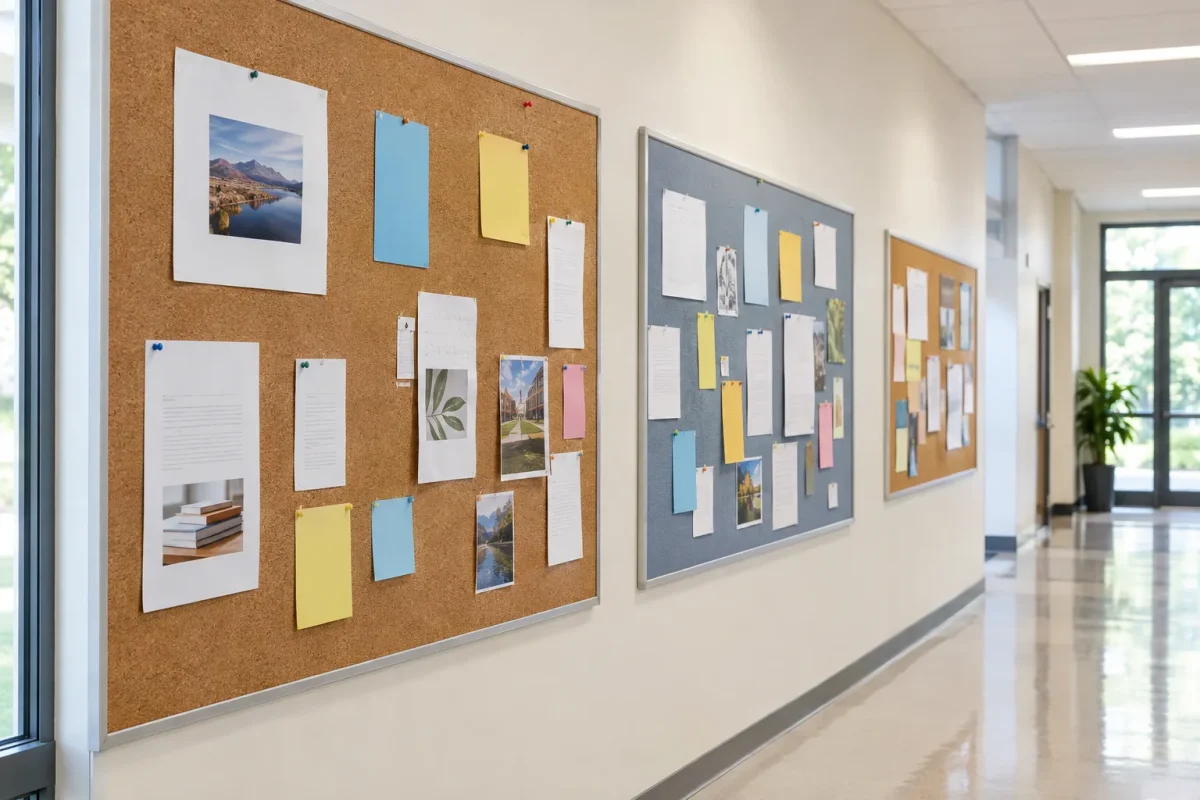
A cork notice board is a wall-mounted display surface made from natural cork material, designed to accept standard pins and thumbtacks for attaching documents, schedules, notices, and announcements. The cork surface grips pins securely without tearing paper, making it the preferred choice wherever content is updated frequently.
Cork boards are well-suited to:
- School staffrooms, administration offices, and classroom corridors
- Community centre foyers and break rooms
- Medical centre waiting areas and healthcare admin zones
- Any environment where staff regularly pin and remove content
The SlimLock Key Lockable Cork Notice Boards from Snapper Display are available in custom sizes and colours and include a lockable aluminium frame that encloses the cork surface behind a clear front panel.
Magnetic Notice Boards
A magnetic notice board is a display surface with a steel-backed or magnetic-receptive face that holds documents, cards, and accessories using magnets rather than pins. Magnetic boards suit environments where pinning is not preferred either for aesthetic reasons or because the surface is also used for writing when whiteboard-compatible.
Key advantages of magnetic boards include:
- No pin holes in documents, making them reusable
- Compatible with magnetic accessories like document holders and name plates
- Cleaner visual finish suitable for reception areas and executive spaces
- Dual function when the surface is also whiteboard-capable
SlimLock Key Lockable Magnetic Notice Boards offer the same SlimLock locking enclosure as the cork range, combining magnetic functionality with secure content protection.
Pin Notice Boards
A pin notice board, sometimes called a fabric board, uses a fabric-covered, foam-backed surface rather than natural cork. The fabric face accepts pins cleanly and presents a more refined appearance, making it a practical option where content is updated frequently.
Pin boards are commonly selected for:
- Corporate reception areas and boardrooms
- Hotel lobbies and conference facilities
- Hospital administration and visitor-facing zones
- Retail back-of-house and presentation spaces
SlimLock Key Lockable Pin Notice Boards are available in custom sizes and colours, offering the same secure enclosure format and suited to environments that require both a polished appearance and controlled access to displayed content.
Lockable Notice Boards
A lockable notice board is any display board that incorporates a locking mechanism to prevent unauthorised access to the content behind the frame. Lockable boards are available across cork, magnetic, and pin board surfaces.
SlimLock key locking: Uses a dedicated key to lock and unlock the aluminium frame enclosure. Appropriate for staffrooms, HR offices, school administration areas, and any location where a designated keyholder manages content updates.
Allen key locking: Uses a standard Allen key (hex key) to secure the frame. Common on snap frame formats and suited to environments where multiple staff may need to update content but unauthorised public access must be restricted.
Choose a lockable notice board when:
- Content includes legal, compliance, or HR documents
- The board is in a public or semi-public location
- Notices must not be removed or altered between scheduled updates
- Your organisation has internal, WHS, strata or body corporate requirements around how displayed information is managed.
What Makes a Notice Board Suitable for Outdoor Use?
Features to consider when choosing an outdoor-rated notice board include:
- UV-resistant display surface to prevent fading and degradation under direct sunlight
- Weather-resistant aluminium or suitably finished steel designed to improve resistance to corrosion and environmental exposure.
- Sealed or lockable doors to prevent moisture ingress from rain and humidity
- Anti-glare or toughened glazing or perspex front panel for readability without reflection
- Suitable for coastal climates, where salt air accelerates corrosion on substandard materials
Best Notice Boards for Outdoor Use in Australia
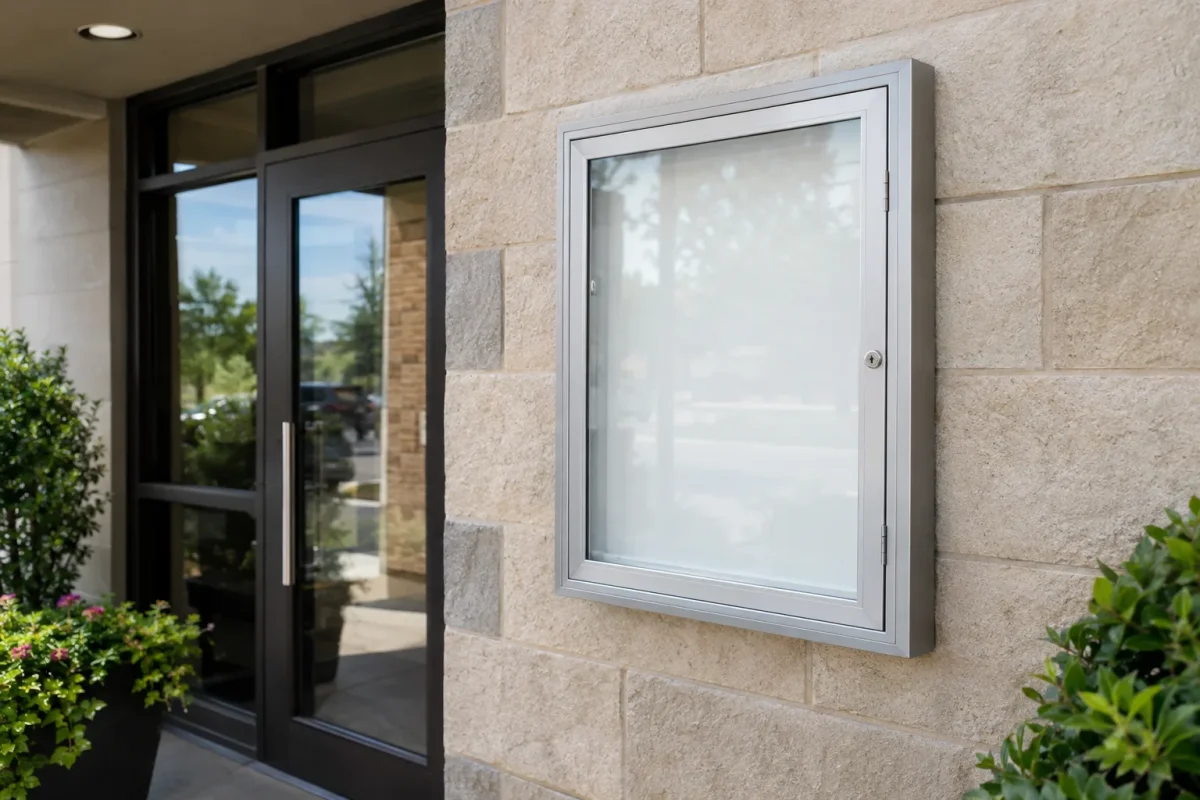
Enclosed outdoor display cases with lockable aluminium frames are the recommended standard for any external display application in Australia. These units mount to exterior walls, gate posts, or freestanding poles and help protect displayed content from rain, UV exposure and general environmental conditions, subject to the product’s rating and installation.
Common outdoor applications include:
- School entry points and outdoor corridor displays
- Building exterior information points for apartments and commercial properties
- Factory gates and industrial site safety notice displays
- Community noticeboards in parks and recreation areas
- Property management boards for strata complexes
| Feature | Indoor Notice Boards | Outdoor Enclosed Display Cases |
|---|---|---|
| Frame material | Aluminium or timber | Weatherproof aluminium or powder-coated steel |
| Surface UV resistance | Not required | Required |
| Moisture sealing | Not required | Sealed frame and lockable door |
| Locking | Optional | Standard |
| Mounting options | Wall-mounted | Wall, post, or freestanding |
| Suitable environments | Internal walls, corridors, offices | External walls, gates, public areas |
Choosing the Right Notice Board by Industry or Setting
Schools require high pin-capacity surfaces that allow fast, frequent content updates across multiple areas. Cork or fabric pin boards are commonly used for classrooms, staffrooms and corridor displays. Where notices need additional protection, a SlimLock lockable cork or pin board may be suitable.
For timetables, examination schedules, and administrative communications that must not be altered between updates, a SlimLock lockable cork or pin board is the appropriate solution.
Schools typically need boards across multiple zones:
- Classrooms: Standard cork or pin boards, moderate size (600 x 900mm to 900 x 1200mm)
- Staffrooms: Larger cork boards with or without locking, high update frequency
- Main hall and reception: Fabric pin boards for professional presentation, lockable
- Building exteriors: Outdoor enclosed display cases for entry-point information
Custom sizing can be useful in older or refurbished buildings where available wall space does not align with standard board dimensions.
Which Notice Board Works Best in Offices and Workplaces?
Corporate offices and professional workplaces prioritise clean presentation alongside practical function. Magnetic or fabric pin boards in neutral frame finishes suit reception areas and meeting rooms. For HR compliance notices, WHS safety information, and policy documents that must remain unchanged, a key lockable or Allen key lockable notice board is the appropriate selection.
For shared commercial buildings with multiple tenants, enclosed display cases in the lobby area provide a professional, tamper-resistant format for building communications. Strata managers and building operators often use this format to comply with obligations around notice display under relevant Australian legislation.
Which Notice Board Is Recommended for Healthcare Facilities?
In clinical or hygiene-sensitive areas, buyers may prefer smooth, easy-to-clean surfaces. Facility-specific cleaning and infection-control requirements should be considered when selecting the board type.
Lockable enclosed boards protect sensitive patient communications, staff rosters, and health and safety information. Outdoor enclosed display cases serve hospital entrance points and car park information boards effectively.
Key healthcare applications:
- Clinical areas: Lockable magnetic boards for frequent content swaps in controlled environments
- Staff areas: Lockable cork or pin boards for rosters and HR communications
- Public-facing areas: Enclosed display cases for visitor information and wayfinding
- External walls: Weatherproof outdoor cases for signage at building entries
Notice Boards for Strata, Property and Community Settings
Strata and property managers may need to display meeting notices, building information and other communications in accessible locations, depending on applicable state or territory requirements and building procedures. Lockable formats can help reduce unauthorised removal or alteration of displayed information.
Outdoor weatherproof enclosed cases are the standard for building foyers with external access and exterior walls. Lockable formats prevent tampering with legally required notices. Post-mounted options suit open community areas without adjacent wall space.
Custom sizes are particularly relevant in this sector because building foyers, letterbox areas, and community spaces rarely conform to standard board dimensions.
Notice Boards for Retail and Hospitality
Retail and hospitality environments divide display needs between customer-facing and staff-only areas. Front-of-house applications require presentation quality: fabric pin boards or magnetic boards in clean aluminium finishes complement a professional retail interior. Enclosed display cases work well for promotional information in high-traffic public zones. Staff areas including kitchens, change rooms, and back-of-house corridors require lockable boards for rosters, health and safety compliance, and operational notices.
Key Features to Evaluate Before You Buy
Before committing to a notice board purchase, evaluate these six criteria against your specific environment and requirements:
- Surface type (cork, magnetic, fabric pin): Match the surface to your preferred method of attaching content and the update frequency you require.
- Security level (open, SlimLock key lockable, Allen key lockable): Match the locking format to the sensitivity of the content and the level of public access at the location.
- Indoor or outdoor rating: Confirm weatherproofing, UV resistance, and sealed construction if the board will be installed in any external or semi-exposed location.
- Size and custom options: Measure your available wall space precisely and confirm whether custom dimensions are available for your preferred board type. SlimLock Cork and Pin Notice Boards are available in custom sizes and colours.
- Mounting method: Wall-mounted configurations are most common in commercial and institutional settings. Post-mounted options suit outdoor areas without adjacent walls. Confirm the mounting requirements for your installation location before ordering.
- Frame finish and colour: Aluminium natural, powder-coated colours, and timber-edge finishes are available across different product lines. Choose a finish that complements the interior design scheme or branding environment.
Notice Board Size Guide
Size selection should be driven by three practical factors: the volume of content you need to display at any one time, the available wall space, and the viewing distance from where the audience will typically read the board.
General guidance for Australian commercial buyers:
- Small boards (up to 600 x 900mm): Suited to single-document or limited notice display in individual offices, small meeting rooms, or reception counters.
- Medium boards (900 x 1200mm to 1200 x 1800mm): The most common range for staffrooms, school corridors, and workplace common areas where multiple notices are displayed simultaneously.
- Large boards (1200 x 2400mm and above): Appropriate for main halls, large common areas, factory floors, and high-visibility display points where content must be readable from a distance.
When planning a large corridor or common area, consider whether multiple medium boards positioned at intervals will outperform a single large board. Multiple boards allow content to be categorised by topic or department and are easier to update individually. Snapper Display offers custom sizing across the cork, magnetic, and pin board ranges, which means non-standard wall dimensions are not a barrier to getting the right fit.
Frequently Asked Questions About Choosing a Notice Board
Q: What is the difference between a cork board and a pin board?
A: A cork board uses a natural cork surface for pinning notes and documents. A pin board uses a fabric-covered, foam-backed surface that provides a more polished and refined appearance. Pin boards are commonly selected for reception areas, boardrooms, and professional settings where visual presentation is as important as function.
Q: When should I choose a lockable notice board?
A: Choose a lockable notice board when displayed content must be protected from tampering, unauthorised removal, or modification. This applies to legal notices, HR documents, WHS compliance information, body corporate communications, examination timetables, and any public-facing display in high-traffic areas where the integrity of the information must be maintained.
Q: Can notice boards be ordered in custom sizes?
A: Yes. SlimLock Key Lockable Cork Notice Boards and SlimLock Key Lockable Pin Notice Boards are both available in custom sizes and colours to suit non-standard wall spaces or specific layout requirements. Contact Snapper Display to discuss custom dimensions or volume orders for multi-site procurement.
Q: What is the difference between SlimLock and Allen key locking mechanisms?
A: SlimLock uses a dedicated key to lock and unlock the aluminium enclosure frame, making it appropriate for environments where a single keyholder manages content updates. Allen key locking uses a standard hex key and suits snap frame formats where staff need occasional access but public tampering must be prevented. Both formats are available across Snapper Display’s notice board range.
Ready to request a quote?
Tell us about your display and we will confirm pricing for your configuration.